

As teachers prepare for the new school year, besides books and class supplies, some teachers are stocking their classrooms with military-grade devices to protect their students. One Bay Area teacher purchased a metal bat and the Barracuda, a metal bar that prevents entry, for her classroom. She also plans to run drills for her elementary school students to teach them how to stay quiet and to listen to her directions when there is an intruder who can harm them.
Seems to me that when our teachers need to arm themselves with active-shooter backpacks loaded with bullet-proof vests, bullet-proof plates/shields, and tourniquets, we need to rethink who we allow to have weapons and under what conditions. No teacher can realistically protect all of the students from a mentally ill person carrying an AK-15 rifle. Consider Uvalde, Texas, where 400 good guys with guns wouldn’t stop one bad guy with a gun for over an hour because they were afraid of the destructive power of a weapon of war in a classroom. 19 children and two teachers were killed.
Schools in 10 states allow teachers to carry concealed weapons to deter would-be shooters. These states are Alabama, Alaska, Idaho, Illinois, Michigan, Missouri, New Hampshire, Oregon, Rhode Island, South Dakota, Utah, and Wyoming. A teacher’s job should be to build strong academic foundations to prepare our youth to be literate, to move on to higher education, and to understand how to function in our society. Many teachers have also taken on parenting roles to feed students who go to school hungry and mentally support abused students. Providing weapons to teachers and administrators will neither protect students nor make schools safer. Instead, it will make guns more available to students and teachers who would not normally have access to them – causing opportunities for more devastating deaths.
Allowing college students to carry concealed weapons on college campuses already exists in 10 states today. These states are Arkansas, Colorado, Georgia, Idaho, Kansas, Mississippi, Oregon, Texas, Utah and Wisconsin. That means that these 18-22 year old students, whose ability to control and self-monitor their behavior is not fully developed because their frontal lobes are not completely formed, have access to guns. So when college kids party and get drunk, instead of fighting with their fists, they can pull out their guns? This sounds like a terrible idea.
Whether we’re talking about guns on elementary, middle school, high school, or college campuses, we’re opening doors to more carnage. Guns, especially AK-15s, are designed to kill. In a civil society, disputes should be settled by discussions and compromises – not murder. To protect myself, I carry pepper spray and keep a bat by my bed. Both are good defensive protections, and they don’t kill.
Protecting your family, home, or business should be done in a way that deters invasions. Because we can mistakenly think that an intruder is going to kill us, our actions should be to disable, not to murder. I remember the time my daughter surprised us with a visit at 2:00 AM. My husband could have shot her – thinking she was a burglar. We need solutions that allow for human error without killing.
Our Founding Fathers did not have access to security cameras, alarms, pepper spray, and 9-1-1 (established by AT&T in 1968), and that’s why they used muskets to protect their homes. We no longer need to have guns to protect our families. In fact, only 13% of colonial Americans owned a gun. The muskets built in the 1770s were not accurate weapons; they’re nothing like the pistols, semi-automatic pistols, rifles (AK-15s), and shotguns that about 72 million Americans own today. Maybe we should take the Constitution literally and allow people to own muskets with lead balls instead of bullets. They would most likely miss their targets and they would only be able to shoot once every minute or so.
During the past 6 months of 2022, about 200 children were killed and about 500 children were wounded by gunshot. Guns make our homes less safe for our families. The press didn’t show images of the carnage from the Uvalde School massacre. The AK-15 is a weapon designed for war. The bullets fire at such velocity that it can decapitate an adult leaving the body like a grenade obliterated it. Children’s bodies were so blown away that it took parents over 6 hours to identify their children through DNA and other means.
In an ideal world, guns would be available only for sport and under careful supervision of gaming and sportsmen’s clubs. Our world is not the same as it was in the 1770s. Today, people handle pressure in different ways and their mental health is not predictable. What we need is a more effective way of screening for mental illnesses. Some states consider family, neighbor, and fellow worker input to get a more accurate read on people who are applying for gun carrying permits.
Other nations like Japan and Singapore have the lowest mortality rate (by firearms) in the world because they have strict gun-control laws. When their citizens get angry, they deal with their anger in non-lethal ways. Guns are a coward’s way out. We need to think smart and stop the carnage now. Let’s make it an inalienable right for every American to protect themselves with security cameras, pepper spray, and bats – not guns.
As teachers prepare for the new school year, besides books and class supplies, some teachers are stocking their classrooms with military-grade devices to protect their students. One Bay Area teacher purchased a metal bat and the Barracuda, a metal bar that prevents entry, for her classroom. She also plans to run drills for her elementary school students to teach them how to stay quiet and to listen to her directions when there is an intruder who can harm them.
Seems to me that when our teachers need to arm themselves with active-shooter backpacks loaded with bullet-proof vests, bullet-proof plates/shields, and tourniquets, we need to rethink who we allow to have weapons and under what conditions. No teacher can realistically protect all of the students from a mentally ill person carrying an AK-15 rifle. Consider Uvalde, Texas, where 400 good guys with guns wouldn’t stop one bad guy with a gun for over an hour because they were afraid of the destructive power of a weapon of war in a classroom. 19 children and two teachers were killed.
Schools in 10 states allow teachers to carry concealed weapons to deter would-be shooters. These states are Alabama, Alaska, Idaho, Illinois, Michigan, Missouri, New Hampshire, Oregon, Rhode Island, South Dakota, Utah, and Wyoming. A teacher’s job should be to build strong academic foundations to prepare our youth to be literate, to move on to higher education, and to understand how to function in our society. Many teachers have also taken on parenting roles to feed students who go to school hungry and mentally support abused students. Providing weapons to teachers and administrators will neither protect students nor make schools safer. Instead, it will make guns more available to students and teachers who would not normally have access to them – causing opportunities for more devastating deaths.
Allowing college students to carry concealed weapons on college campuses already exists in 10 states today. These states are Arkansas, Colorado, Georgia, Idaho, Kansas, Mississippi, Oregon, Texas, Utah and Wisconsin. That means that these 18-22 year old students, whose ability to control and self-monitor their behavior is not fully developed because their frontal lobes are not completely formed, have access to guns. So when college kids party and get drunk, instead of fighting with their fists, they can pull out their guns? This sounds like a terrible idea.
Whether we’re talking about guns on elementary, middle school, high school, or college campuses, we’re opening doors to more carnage. Guns, especially AK-15s, are designed to kill. In a civil society, disputes should be settled by discussions and compromises – not murder. To protect myself, I carry pepper spray and keep a bat by my bed. Both are good defensive protections, and they don’t kill.
Protecting your family, home, or business should be done in a way that deters invasions. Because we can mistakenly think that an intruder is going to kill us, our actions should be to disable, not to murder. I remember the time my daughter surprised us with a visit at 2:00 AM. My husband could have shot her – thinking she was a burglar. We need solutions that allow for human error without killing.
Our Founding Fathers did not have access to security cameras, alarms, pepper spray, and 9-1-1 (established by AT&T in 1968), and that’s why they used muskets to protect their homes. We no longer need to have guns to protect our families. In fact, only 13% of colonial Americans owned a gun. The muskets built in the 1770s were not accurate weapons; they’re nothing like the pistols, semi-automatic pistols, rifles (AK-15s), and shotguns that about 72 million Americans own today. Maybe we should take the Constitution literally and allow people to own muskets with lead balls instead of bullets. They would most likely miss their targets and they would only be able to shoot once every minute or so.
During the past 6 months of 2022, about 200 children were killed and about 500 children were wounded by gunshot. Guns make our homes less safe for our families. The press didn’t show images of the carnage from the Uvalde School massacre. The AK-15 is a weapon designed for war. The bullets fire at such velocity that it can decapitate an adult leaving the body like a grenade obliterated it. Children’s bodies were so blown away that it took parents over 6 hours to identify their children through DNA and other means.
In an ideal world, guns would be available only for sport and under careful supervision of gaming and sportsmen’s clubs. Our world is not the same as it was in the 1770s. Today, people handle pressure in different ways and their mental health is not predictable. What we need is a more effective way of screening for mental illnesses. Some states consider family, neighbor, and fellow worker input to get a more accurate read on people who are applying for gun carrying permits.
Other nations like Japan and Singapore have the lowest mortality rate (by firearms) in the world because they have strict gun-control laws. When their citizens get angry, they deal with their anger in non-lethal ways. Guns are a coward’s way out. We need to think smart and stop the carnage now. Let’s make it an inalienable right for every American to protect themselves with security cameras, pepper spray, and bats – not guns.

College-bound seniors are just days away from complete freedom. For the first time in their lives, they won’t be studying for SATs/ACTs, taking community college classes, or immersing themselves in projects and extracurricular activities to build strong portfolios for college admissions. Phew! And they deserve this break in pressure so they can decompress before heading off to college in the fall.
Some colleges give incoming freshmen summer reading assignments to discuss when they arrive on campus. Most books are meant to stimulate philosophical thinking, and in an ideal world, it could be just what the students need.
But, I’ve noticed that students who were voracious readers in elementary and middle school often stopped reading for pleasure in high school because they were inundated with required reading and homework overload. When applying to college in 12th grade, these students create lists of their favorite nonfiction read during high school — as part of their college applications – many gasp at the thought that they hadn’t read anything for fun since 8th grade.
While I don’t support mandating that college-bound students read a laundry list of required books during the summer before heading off to college, I do believe that they’ll enjoy reading some of the books on colleges’ lists.
Here’s a list of books required by some colleges:
The Nickel Boys by Colson Whitehead, assigned by Sienna College
The Immortal Life of Henrietta Lacks by Rebecca Skloot, assigned by Goucher College
Just Mercy: A Story of Justice and Redemption by Bryan Stevenson, assigned by Seton Hall
The Book of Form and Emptiness by Ruth Ozeki, assigned by Smith College
Weapons of Math Destruction: How Big Data Increases Inequity and Threatens Democracy by Cathy O’Neil, assigned by SUNY Binghamton
The Cancer Journals by Audre Lorde, assigned at Moravian University
This I Believe: The Personal Philosophies of Remarkable Men and Women, edited by Jay Allison and Dan Gediman, assigned at the University of Louisiana at Monroe
Klara and the Sun by Kazuo Ishiguro, assigned at New York University
Junaluska: Oral Histories of a Black Appalachian Community, edited by Susan E. Keefe, assigned at Appalachian State University
They Called Us Enemy by George Takei, assigned at Bucknell University
The Office of Historical Corrections by Danielle Evans, assigned at Saint Michael’s College
Dig by A. S. King, assigned at SUNY Oswego
Or, maybe college-bound kids could immerse themselves in some of those books that they just never had time to read during high school.
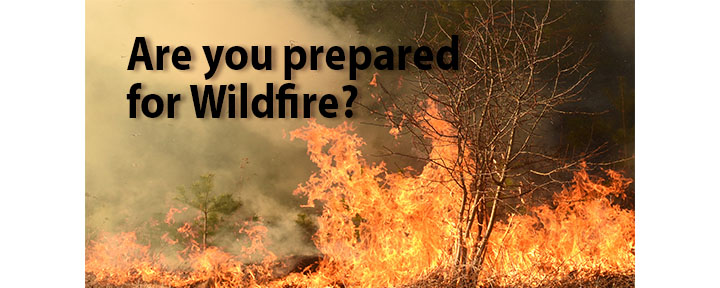
Children, and adults, are anxious about the negative effects of wildfires and climate-related disasters. The uncertainty of when they will strike and the restrictions it puts on after-school activities, family vacations, and even on-site classes are taking its toll on all of us.
I recently hosted the North Rodeo Gulch Firewise event to encourage residents to take action to mitigate wildfires. With over 17 expert speakers from Supervisor Manu Koenig to Central Fire’s top brass to SC County sheriff to ARES (ham radio), they addressed concerns and offered excellent tips on how to navigate the upcoming fire season.
My daughter, Dr. Nicole D’Arcy, ER physician at Valley Medical Center in San Jose, spoke about how to treat burns and injuries when emergency aid is not available. Sean Gomez, my 9th-grade student, spoke about his cyber deck project that can give us vital information when we are cut off from all forms of communication.
You can watch the entire presentation at NRGfirewise.com/events.
Here are the 5 steps you can take now to prepare for the inevitable wildfires – and to ease your stress knowing that you are proactive in protecting your family and home.
1. Pack Go-Bag
Besides food, water, meds, toiletries and clothing, add these vital items: butterfly bandages, duct tape, ACE wrap, headlamp, tweezers, gauze, antibiotics ointment/medi-honey, goggles, respirator N95 masks, the list of all your medications, and all your essential prescriptions (inhalers, EpiPens, heart medications). Keep these in your bag so you’re always prepared.
2. Sign up for CodeRED
This reverse 9-1-1 system will alert you about emergency evacuations, severe weather, missing persons, and more. You’ll be notified by cell phone or landline. Go to scr911.org to sign up.
3. Purchase a MURS Radio
When your power goes off and/or you lose cell phone reception, you will be able to communicate with neighbors using the MURS radio system to get emergency updates from the OR3, fire department, sheriff/police, etc. We recommend the Dakota Alert or the BaoFeng UV-82C radios. You don’t need a license to use these radios and you can talk to ham radio operators to relay your emergencies.
4. Clear all Combustible Materials 5 Feet Around your House
Remove all wood, plastic, or anything that is flammable that touches your house and work your way outward 5 feet. That means your patio set, stacks of firewood, planter boxes, and any vegetation. I just cut 100-feet of gorgeous wisteria that completely wrapped around my house. The fire inspector told me the vines would act like a wick to ignite my house; that’s all I needed to hear before I pulled out my shears.
5. Reduce Fire Risk by Limbing up Trees and Clearing Roadways
Think about what you can do to keep wildfires from igniting on your property. Limb up tree branches to 6-10 feet from the ground. Thin trees so their canopies don’t touch each other. Weed whack brush to 2”-4” tall. Clear trees and overhanging branches so a fire apparatus can safely drive up your roads. The road should be cleared at least 26 feet wide and at least 13 feet 6 inches tall. Fire fighters will not drive up roads that are unsafe for their teams. Work with your neighbors to clear your roads and maintain them.
Create a plan that gives you several months to complete your fire prevention preparation. Lay it out in your planner or calendar; having it written will help ensure that you get it done. Continue to make plans into the future so you can take steps that work within your budget and free time.
Check out NRGfirewise.com for resources and more tips.

Congratulations to UC-bound students! While you’re preparing for graduation, there are a few things you need to do to complete your requirements for admission to the University of California. Submit the following:
1. Final high school transcript indicating your graduation date and final grades for 12th grade by July 1, 2022 (electronically, not emailed).
* If your transcript will not be available by July1, email AskUC@ucop.edu and your college with high school name, CEEB code, and date transcript will be available.
2. Transcripts from all college coursework taken during high school. (electronically, not emailed).
3. AP/IB/A-level exam scores by July 15, 2022
4. Full or partial UC IGETC certification by July 15, 2022
5. Analytical Writing Placement Exam and Entry Level Writing Requirement
* Check with your individual campus to see what specific guidelines for meeting the Entry Level Writing Requirement.
* UCD, UCI, UCM, UCSB, UCSC does not require the AWPE
* UCB,UCLA, UCR, and UCSD can take the AWPE to satisfy the Entry Level
Writing Requirement. Check with the individual campus for further information.
We are helping students lay out their 4-year plans to ensure that they take full advantage of courses, research opportunities, internships, and prep for grad school. If you’d like to create your 4-year plan, contact us at Merit (info@meritworld.com).

After 2 challenging years with off campus (online) classes due to COVID, and now inflation (and fear of rising inflation), colleges are ramping up tuition to help offset their costs. Our current inflation rate is 8.3% over last year. Colleges are now paying more for faculty, administrative costs, fuel, utilities, food, health care, and more.
Boston University just raised its tuition 4.25% for 2022-23 after increasing it 3% last year. University of Virginia will increase tuition 8.4% over the next 2 years.
Public colleges may be limited by law to incremental tuition increases. Washington State University is allowed to increase tuition by only 2.4% per year for in-state undergraduates. There are no laws to protect graduate, out-of-state, or international students, but Washington has kept tuition increases to just 5% for these students.
With the wildly unpredictable world that we live in today, students should look at projected tuition increases to determine if they can afford to attend for all 4 years. Don’t rely on student loan debt forgiveness promises or tuition bailouts when making these important decisions.

While over 85% of medical and law professional degrees boast a lifetime positive ROI of over $500,000, other Ph.D.s in education and non-STEM fields don’t reap the same rewards. We all know that STEM programs and professional degrees (medical, law) often pay off, but new reports found that 60% of M.B.A.s (America’s most popular master’s degree) and other business-related master’s degrees don’t provide a positive return on the investment (unless you are in a top M.B.A. program).
When considering lost wages and the cost of tuition while going to graduate school in humanities, over half of the students are worse off after earning that degree.
Do the research, and the math, before pursuing higher education. Ask yourself, “Will I improve my career and income if I invest in a higher degree?” More degrees doesn’t always mean more earning potential.
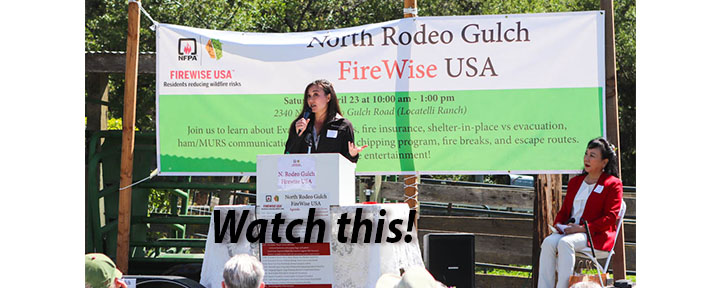
To all Firewise communities and all of those who live in wildland urban interface (WUI) areas, I’ve recorded our entire NRG Firewise Event presentations for you to share with your neighbors and communities. Our 2.5-presentation includes the experts to discuss 17 poignant topics to encourage residents to prepare for wildfires.
Hearing from Supervisor Manu Koenig, OR3, Central Fire, CalFire, Sheriff, ARES, CERT, ER doctor, MURS leaders, RCD, road associations, equine evacuation, Calif Fair Plan, and more, all in one place gives lots of information in an entertaining fashion. We even interviewed our vendors so our community could see innovative solutions offered in products and services.
Let’s reach out to our neighbors and communities to work together to mitigate wildfires from destroying our lives. We can do this!
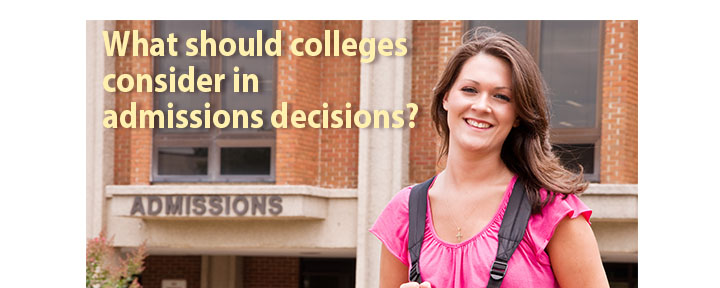
Surprising Pew poll found that 74% of adults think that race and ethnicity should not be considered in admissions decisions. 82% found that gender should not be considered. 61% of respondents support consideration of high school grades and 39% support standardized tests. And this study included every racial group and even Democrats and Republicans.
The US Supreme Court is preparing to hear 2 cases on the future of affirmative action policies at Harvard and UNC Chapel Hill in October 2022. With admission rates dropping for selective colleges this year, the public is looking for more fair admissions policies.
|
Apparently, Americans consider these factors important:
Americans Evaluate What Colleges Should Consider
Factor |
% Who Believe It Should Be a Major Factor | A Minor Factor | Shouldn’t Be Considered |
Community service |
19% | 48% | 33% |
| First in family to go to college | 18% | 28% | 54% |
| Athletic ability | 9% | 36% | 55% |
| Race or ethnicity | 7% | 19% | 74% |
| Whether a relative attended the college | 5% | 20% | 75% Americans Evaluate What Colleges Should Consider |
| Gender | 4% | 14% | 82% |
Pew broke down the responses on race and ethnicity in admissions by race and by political identity. The proportions who believe that race and ethnicity shouldn’t be considered were: 79 percent for white people, 59 percent for Black people, 68 percent for Hispanics and 63 percent for Asians.
In terms of politics, while 87 percent of Republicans said race and ethnicity should not be considered in admissions decisions, 62 percent of Democrats agreed.
The survey was of 10,441 American adults.
There is a lot of frustration amongst college applicants this year, when so many qualified students were denied admission to their top colleges. Seems like Americans are looking for fair college admissions policies.
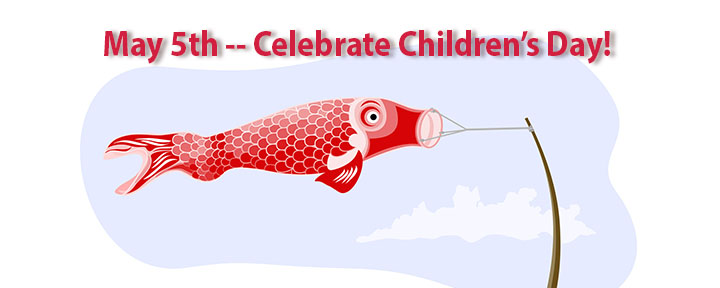
In Japan, May 5th is Children’s Day — a special day that celebrates children’s health, happiness, and individuality. It used to be known as “Boys’ Day” and March 3rd was “Girls’ Day,” but in 1948 the name was changed to celebrate both boys and girls. Mothers and fathers are also recognized and celebrated on this day. You’ll see carp-shaped windsocks flying to illustrate the carp swimming upstream to become a dragon and fly to heaven. I love this day because we can bring out our Japanese samurai dolls riding on flying carp and eat mochi filled with red bean ham and wrapped in oak leaves! Let our children, be children; and let’s appreciate our parents and teachers!
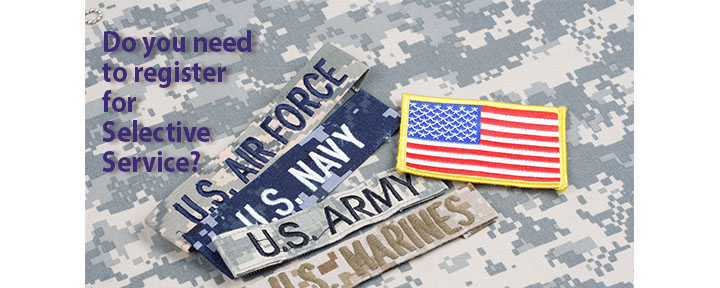
Did you know that all male US citizens (age 18-25) need to register for Selective Service within 30 days of their 18th birthday? And, all non-US citizen men between 18-25 years of age also much register?
In California, only 38% of men registered when they turned 18 years old. Apparently 92% of men, 18-25 years old, have registered in the rest of the United States.
The penalty for not registering for the Selective Service is up to 5 years in prison and a $250,000 fine. In 2018, the Selective Service referred over 100,000 names and addresses of suspected violators.
By registering and complying with the Selective Service, these men are eligible for opportunities both now and in the future: federal financial aid, state-funded student financial aid in many states, most federal employment, security clearance for contractors, job training under the Workforce Innovation and Opportunity Ace, and US citizenship for immigrant men.
To be considered for Small Business Loans and FEMA grants/loans, male applicants need to be registered with the Selective Service.
Not sure if you or your son has registered, check here
Want to register for the Selective Service now? Check here