
 We all know that we function better on a good night’s sleep. So why do college students cram during finals – often getting just 5 hours (or less) sleep per night to get in those few extra hours of studying? Most incorrectly believe that staying up late will give them the time they need to comprehend more data to improve their test scores.
To challenge this belief, Michael Scullin, director at Baylor’s Sleep Neuroscience and Cognition Lab, gave students extra credit points on his final exam if they slept for at least 8 hours per night during finals week. Wearing Fitbit-type devices to detect sleeping patterns, the 24 students who got the extra sleep outperformed their classmates who crammed and stayed up until the wee hours of the morning during finals week.
Surprise, surprise.
With better memory, mood, and health, students found that their brains worked better while taking the exams. In other words, spending ridiculous hours studying material with sleep deprivation doesn’t produce better grades. It’s not the quantity of time spent studying but the quality of time. With a rejuvenated brain and body after a good night’s sleep (minimum 8 hours), students can read questions with more comprehension and answer them with better clarity.
Students will need to establish a healthy sleep culture to accommodate socializing with friends, watching YouTube videos and playing games, and studying for exams. Perhaps creating a routine that includes 8 hours of sleep that creates this balance will give students the sleep they need with blocks of time for studying and friends.
[Source]

We all know that we function better on a good night’s sleep. So why do college students cram during finals – often getting just 5 hours (or less) sleep per night to get in those few extra hours of studying? Most incorrectly believe that staying up late will give them the time they need to comprehend more data to improve their test scores.
To challenge this belief, Michael Scullin, director at Baylor’s Sleep Neuroscience and Cognition Lab, gave students extra credit points on his final exam if they slept for at least 8 hours per night during finals week. Wearing Fitbit-type devices to detect sleeping patterns, the 24 students who got the extra sleep outperformed their classmates who crammed and stayed up until the wee hours of the morning during finals week.
Surprise, surprise.
With better memory, mood, and health, students found that their brains worked better while taking the exams. In other words, spending ridiculous hours studying material with sleep deprivation doesn’t produce better grades. It’s not the quantity of time spent studying but the quality of time. With a rejuvenated brain and body after a good night’s sleep (minimum 8 hours), students can read questions with more comprehension and answer them with better clarity.
Students will need to establish a healthy sleep culture to accommodate socializing with friends, watching YouTube videos and playing games, and studying for exams. Perhaps creating a routine that includes 8 hours of sleep that creates this balance will give students the sleep they need with blocks of time for studying and friends.
[Source]

 We’re proud to announce that Susan Tatsui-D’Arcy has been selected to be the 2019 California Mother of the Year® by American Mothers, Inc. This nonprofit organization was started by President Franklin Delano Roosevelt’s mother Sara Delano Roosevelt back in 1935, and it has been honoring Mothers of the Year in all 50 states every year since. Many outstanding individuals throughout America have also served as officers, leaders, supporters and award recipients of this organization such as First Lady Mamie Eisenhower, Congresswoman Lindy Boggs, and Hillary Rodham Clinton.
With Susan’s platform, she will speak to mothers about two of her passions: Setting up free child care for mothers, and guiding students to do projects that will help them get into top colleges, while solving regional and international problems.
Susan will be honored at the California Mother of the Year® gala in Southern California on April 13th where she’ll talk about her plans to speak to moms at multiple events across many different media platforms throughout the year.
Susan is also a nominee for the National Mother of the Year® award, which will be announced in Washington D.C. on April 30th. If you have suggestions for outreach that Susan can do as California’s 2019 Mother of the Year®, please email her at susan@meritworld.com. Here’s a link to the American Mother’s formal announcement!
 In August, Merit Academy hosted TEDxMeritAcademy at the Rio Theatre in Santa Cruz.
Ethan Hsiao was a featured speaker, and his TEDx Talk is embedded below.
“Demystifying Nanotech”
Despite the highly difficult, “for-geniuses-only” stigma of nanotechnology, the truth is that everyone can understand nanotech and expand its reaches through their own contributions. Ethan discusses finding a new, unprecedented crystal structure while analyzing the ratios of the amount of chemicals (precursor molar ratios) in the chemical reaction that results in the product MoS2 , a 2D material. These results could have implications on the industrial implementation of transistors and nano-LEDs, as well as lead to a better understanding of how MoS2 synthesis works.
About Ethan Hsaio: A high school senior, Ethan is passionate about nanoscience and materials science and by the interdisciplinary component that they encompass. He researched the synthesis of a 2D material that had a variety of applications in nanotech. Ethan hopes to give a glimpse of what makes nanotech exciting.

 There’s finally a “period” emoji. Not to be confused with a punctuation mark – it’s the taboo topic about menstruation. Across all civilizations and even up to today, the monthly menstrual cycle continues to be a hush-hush subject. Periods have been referred to as “Aunt Flo” and other euphemisms. Some societies still banish women to huts outside villages while they are on their periods – don’t get me started… But the Unicode Consortium just announced that they have approved the period emoji, which is a drop of blood.
It’s about time! When emojis are essential in adding emotions and a little depth to quick text messages, having the period emoji can instantly give color (no pun intended) to the situation. Just as a raised eyebrow emoji makes one wonder what’s going on, the period emoji may explain why we might forgo strenuous exercise. Glad to see a little progress being made here with the important and vital part that menstruation plays in the survival of civilization.
[Source]
 In August, Merit Academy hosted TEDxMeritAcademy at the Rio Theatre in Santa Cruz.
Eshika Nellore was a featured speaker, and her TEDx Talk is embedded below.
“Get Your Shots!”
Worried that plagues and diseases will cause hundreds of thousands of people to die, Eshika will present a refreshing solution to stop the spread of these illnesses. She brings to light, logical explanations behind shots and how they help protect the body from these epidemics. Come see how she implements music, art and reasoning in her talk!
About Eshika Nellore : Eshika is a high school senior who is interested in studying medicine and public health. She founded Get Your Shots!, wrote a song and created a whiteboard video to prevent the return of eradicated diseases because there is a rise of people who are not getting immunized. As a volunteer in the Philippines, Eshika saw firsthand the recurrence of many diseases due to lack of vaccinations. While there, she educated indigenous people (Aeta communities) about a eating a high protein diet and washing your hands after using the restroom or before eating. In high school, Eshika was a speech and debate captain for expository speech and assisted a cardiologist. She is also a singer who has been vocally trained in musical theatre and opera for five years and has received awards in singing competitions.

 Did you know that the University of California (UC) system has had some of the most strict (and ridiculous) requirements for eligibility? These requirements don’t require more difficult courses but particular science and math courses that have forced students to retake courses before applying to UCs.
Students have to take 2 years (3 years recommended) of college-prep lab sciences including or integrating 2 of these 3 subjects: biology, chemistry, or physics. Starting in 2019-2020, students can take the following courses that will satisfy Area D in the A-G requirements:
- 1 year of approved interdisciplinary or earth and space sciences meets one-year lab requirement (1st and 2nd year lab science)
- Computer Science, Engineering, and Applied Science courses can be used as ADDITIONAL lab sciences (3rd year and beyond, but not 1st or 2nd year lab science)
- Online science lab sciences will be allowed (labs must be supervised by teacher and give students hands-on learning opportunities)
For Math (Area C), the following middle school math courses will satisfy Area C in the A-G requirements:
- 7th or 8th grade Algebra and Geometry courses will satisfy Area C requirements for Algebra and Geometry at the high school level.
Glad to see that UCs have relaxed their strict A-G requirements so students can take the classes they’re interested in at a time that benefits them.
[Source]

 With the high cost of a bachelor’s degree, many parents are taking out loans that they can’t afford to repay. They can actually be delinquent on other loans and still qualify for the Parent PLUS loans. Hmm. Why would lenders do that? In 1990, parents borrowed about $5200 annually; in 2014, they borrowed $16,000. Even worse, parents who really need financial aid often rely on the Parent PLUS loans after they’ve reached their limits with subsidized (government pays the interest while student is in college) and unsubsidized (interest payments start immediately) Stafford loans. These loans don’t have income-based repayment plans or loan forgiveness that they might have with federal undergraduate debt.
Underrepresented minority students are hit the hardest. When colleges don’t offer enough scholarship money and they reach their borrowing limits on government loans, parents are pressured to fill the gap between affordable loans and the total cost of the bachelor’s degree with Parent PLUS loans that they may never be able to repay. In 2011, the Obama administration tightened eligibility standards on the Parent PLUS loans to ensure that families could repay their loans.
Unfortunately, this creates an unfair advantage for students whose parents can simply write those tuition checks. Lower income families with students who have average grades and SAT/ACT scores often shy away from elite and private colleges because they know they can’t afford the costs and won’t qualify for merit-based grants. Many of these parents who are desperate to give their children a college degree often give up their retirement and any chance of establishing financial security for themselves. What’s really devastating is that many students never complete their degrees or they get degrees in careers that don’t provide a good return on investment (ROI). The ridiculous cost of a college degree needs to change to reflect what parents and students can afford.
[Source]
 In August, Merit Academy hosted TEDxMeritAcademy at the Rio Theatre in Santa Cruz.
Aryan Dawra was a featured speaker, and his TEDx Talk is embedded below.
“Cleaning up the Atmosphere One Car at a Time”
The Particulate Emissions Tailpipe (PET) is a device that can be attached to the end of your car’s tailpipe and captures the toxic particulate matter that is emitted from the engine. Aryan experimented and found that by creating an electric field within this device, it acts like a filter. PET is designed to be built using household and easily accessible items. Check out the PET Tailpipe Youtube Channel so you can build your own PET yourself and reduce the toxic particulates that spews from your car’s tailpipe.
About Aryan Dawra: Aryan Dawra is a rising senior who enjoys taking on big challenges like global warming. He designed and engineered the Particulate Emissions Tailpipe, also known as the PET Tailpipe. PET is a device that captures the particulate matter that comes out of your car’s tailpipe.
 When online courses were first offered, there was much speculation about the quality of learning that might take place in such courses. The biggest concerns centered around student interaction with students, as well as professors. Today, smaller colleges and universities are working with online colleges to help students take classes when there are scheduling conflicts, replace bad grades, and graduate on time.
Normally, students are responsible for finding online courses that their colleges will allow and handling registration, fees, and transcripts. But today, the College Consortium provides an online course-sharing consortium with over 650 colleges. The best part, they handle registration, fees, and transcripts so the student’s home college will seamlessly accept and include these online courses from various other colleges right on the student’s transcript.
The student’s home college pays for the registration and tuition for the online college course using the student’s regular tuition paid for that term. The home college benefits because they don’t need to offer obscure courses with low enrollment and the student graduates and moves on in a timely fashion. The online college benefits because it increases its enrollment, and the College Consortium gets its fees from the home college for handling all of the moving pieces in this very complex program. Everybody wins!
It’s exciting to see creative solutions that help students improve their GPAs and graduate sooner. Graduating just one semester sooner can save them up to $25,000! I’m watching to see if there is a change in the quality of the student’s learning and education when students take online courses at different institutions all while receiving their diplomas from their home college.
[Source]







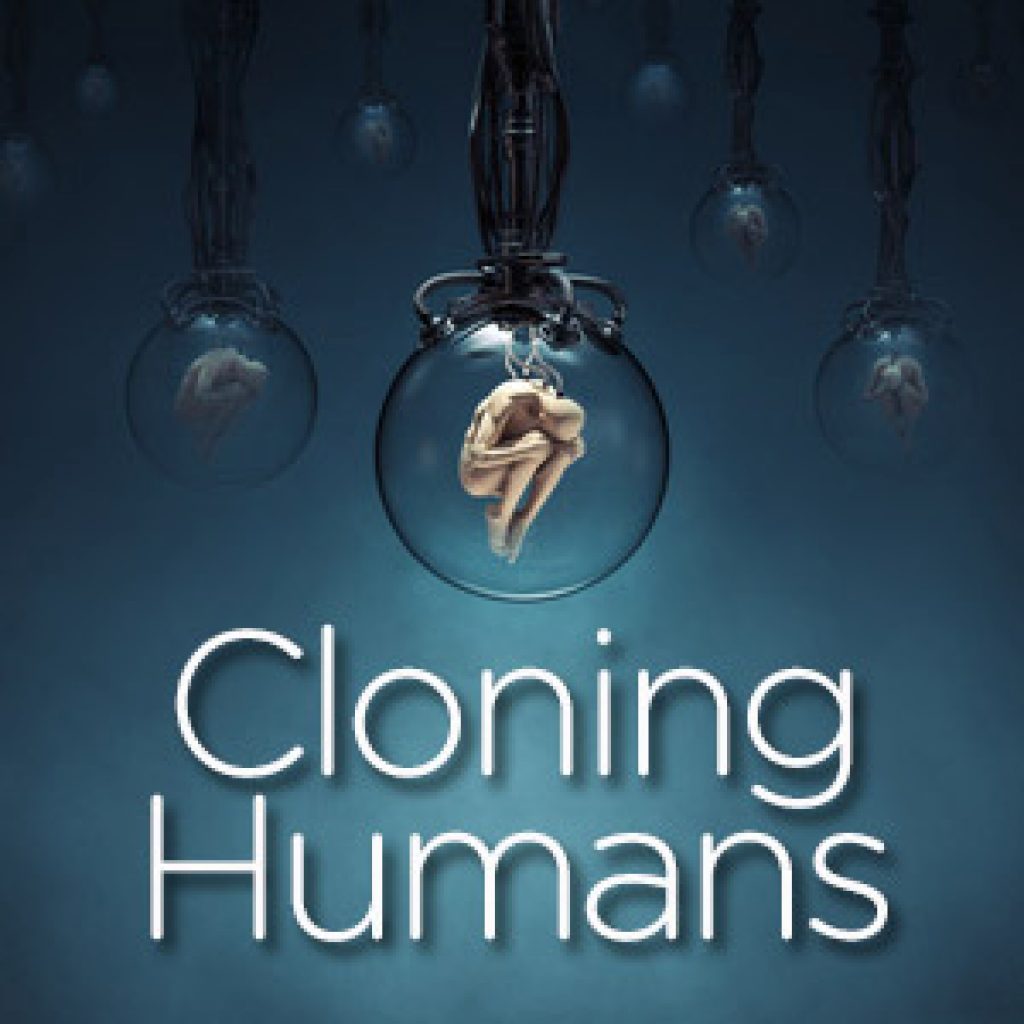
 Money corrupts even the most ethical people. We see this happening every day. So why then, did universities around the world believe that they could research gene editing technology using CRISPR with an ethical code to not experiment with human cloning? CRISPR (or this technology) was first developed in 1987, and was hoped to revolutionize everything from medicine to agriculture. In 2017, I was appalled to find CRISPR used in virtually every university in American and around the world. Hmm. What could go wrong?
In China, the first twin girls with altered DNA were born in November 2018. At the Southern University of Science and Technology in Shenzhen, He Jiankui used CRISPR to change their DNA to make them immune to HIV infection. This type of gene editing is banned in the US because these DNA changes (good or bad) can be passed along to future generations. Just last week, the Chinese university fired the professor for “seriously violating” government regulations.
Then, we find that an American professor at Rice University, Michael Deem, was involved in this research. ARGH! According to Kiran Masunuru, a University of Pennsylvania gene-editing expert and editor of a genetics journal called this “unconscionable” and that experimenting on humans is “not ethically defensible.”
How are we going to prevent people from using this gene-editing technology to produce bionic people or to create a super race or gender? When asked if the genie was really out of the bottle, George Church, a Harvard Medical School genetics professor, responded, “Yes.”
[Source 1]
[Source 2]