
 Learning How to Study
There seems to be an epidemic of “poor test takers” who routinely get A’s on their homework but fail miserably on quizzes and tests. Looking at their grade sheets, you’ll see a few D’s or F’s for tests and quizzes scattered among a sea of A’s for homework. Parents shake their head in confusion because their children manage to get high marks for doing their homework but those good grades aren’t reflected in their low test scores.
Parents often meet with their children’s teachers in search of explanations for these disparate grades. As the director at Merit Educational Consultants, I often hear parents’ claims that their children do their homework and receive excellent grades but that they are just “poor test takers.” Although test taking does require some skills, these students aren’t poor test takers. Claims like this are misconceptions. With the exception of students with learning differences or test anxiety, the problem isn’t poor test-taking skills; rather, they simply don’t know how to study for tests. When students learn how to study, they can achieve much higher exam scores that accurately reflect their academic potential.
Homework scores don’t always indicate how well students know the curriculum/material, either. Some teachers simply give credit to students for attempting to do the work. Others don’t correct the students’ work, so even though they did the assignment, there’s a possibility that every answer was incorrect. Even when the teachers do correct the homework assignments, the actual exercise may not guarantee that the students are learning the concepts. With their iPods blaring and their cell phones ringing, many students can mindlessly fill in the blanks and skim books while they go through the motions to complete their homework as quickly as possible.
Consider this. A math teacher may introduce a new concept and provide several examples on the board during class. Then when the students go home that evening to do their homework, they simply review their class notes, plug in the formula, and zip through the problem sets. So what’s wrong with this? The students are just going through the motions. They probably don’t understand why they’re using that particular formula for that type of problem. Then the following day when they learn a new concept in class, the teacher once again gives examples and sends the students home with a new formula to use to solve the equations for that day. A week later, when the students take a quiz or test, they do poorly because they aren’t sure which formula to use. In other words, they didn’t really understand what they were doing; they were on automatic pilot while they did the work.
When teachers announce upcoming tests, some allow students to make “cheat sheets,” which can be index cards or full 8 ½” x 11” sheets of paper filled with notes that the students can use during the tests. It’s remarkable how much information students can squeeze on to their sheets of paper. Other teachers give students study guides that define exactly what will be on the tests. Obviously, both of these systems – along with “going through the motions” while doing homework – fail to encourage students to learn the material that they should be responsible to know.
Most students prepare for their tests by cramming or simply reviewing their notes the night before. They think that by reading through their lecture notes and homework assignments, they’ve done all they need to do to ace their exams. What they don’t understand is that their brains can’t absorb all of that information in such a short period of time, so they can remember only superficial concepts. Cramming doesn’t give the students enough time to thoroughly understand the concepts so they could apply their knowledge in solving difficult questions on a test.
Even if they’re one of the lucky few who can cram the night before for a test and pull an A, what they memorized for the test probably didn’t go into long-term memory; so, when it comes time to study for the final exam, they’ll have to relearn everything again. And worse yet, when these students advance to the next class the following year, they’re setting themselves up for failure because they skimmed the surface of the previous class and don’t have the foundation they need to succeed in courses that require previous knowledge.
When students enter college, they will be expected to have retained basic information from high school courses and apply it to increasingly complex theories. Additionally, students must be able to assess what they need to study without depending on the professor to do so for them. Many a college professor is frustrated by student requests for study guides or open-book tests exactly because it suggests surface-level regurgitation instead of analysis, which is what students must do to succeed.
So how can a student ace a test? It’s really quite simple: the five-day plan. In order to get a perfect score on a test, they need to comprehend, not just memorize, the material. For English or History, that means that they need to have time to read the chapters, highlight important information, rewrite their notes in outline form, make flashcards, and test themselves. This will take time because their brains need time to absorb the information.

Learning How to Study
There seems to be an epidemic of “poor test takers” who routinely get A’s on their homework but fail miserably on quizzes and tests. Looking at their grade sheets, you’ll see a few D’s or F’s for tests and quizzes scattered among a sea of A’s for homework. Parents shake their head in confusion because their children manage to get high marks for doing their homework but those good grades aren’t reflected in their low test scores.
Parents often meet with their children’s teachers in search of explanations for these disparate grades. As the director at Merit Educational Consultants, I often hear parents’ claims that their children do their homework and receive excellent grades but that they are just “poor test takers.” Although test taking does require some skills, these students aren’t poor test takers. Claims like this are misconceptions. With the exception of students with learning differences or test anxiety, the problem isn’t poor test-taking skills; rather, they simply don’t know how to study for tests. When students learn how to study, they can achieve much higher exam scores that accurately reflect their academic potential.
Homework scores don’t always indicate how well students know the curriculum/material, either. Some teachers simply give credit to students for attempting to do the work. Others don’t correct the students’ work, so even though they did the assignment, there’s a possibility that every answer was incorrect. Even when the teachers do correct the homework assignments, the actual exercise may not guarantee that the students are learning the concepts. With their iPods blaring and their cell phones ringing, many students can mindlessly fill in the blanks and skim books while they go through the motions to complete their homework as quickly as possible.
Consider this. A math teacher may introduce a new concept and provide several examples on the board during class. Then when the students go home that evening to do their homework, they simply review their class notes, plug in the formula, and zip through the problem sets. So what’s wrong with this? The students are just going through the motions. They probably don’t understand why they’re using that particular formula for that type of problem. Then the following day when they learn a new concept in class, the teacher once again gives examples and sends the students home with a new formula to use to solve the equations for that day. A week later, when the students take a quiz or test, they do poorly because they aren’t sure which formula to use. In other words, they didn’t really understand what they were doing; they were on automatic pilot while they did the work.
When teachers announce upcoming tests, some allow students to make “cheat sheets,” which can be index cards or full 8 ½” x 11” sheets of paper filled with notes that the students can use during the tests. It’s remarkable how much information students can squeeze on to their sheets of paper. Other teachers give students study guides that define exactly what will be on the tests. Obviously, both of these systems – along with “going through the motions” while doing homework – fail to encourage students to learn the material that they should be responsible to know.
Most students prepare for their tests by cramming or simply reviewing their notes the night before. They think that by reading through their lecture notes and homework assignments, they’ve done all they need to do to ace their exams. What they don’t understand is that their brains can’t absorb all of that information in such a short period of time, so they can remember only superficial concepts. Cramming doesn’t give the students enough time to thoroughly understand the concepts so they could apply their knowledge in solving difficult questions on a test.
Even if they’re one of the lucky few who can cram the night before for a test and pull an A, what they memorized for the test probably didn’t go into long-term memory; so, when it comes time to study for the final exam, they’ll have to relearn everything again. And worse yet, when these students advance to the next class the following year, they’re setting themselves up for failure because they skimmed the surface of the previous class and don’t have the foundation they need to succeed in courses that require previous knowledge.
When students enter college, they will be expected to have retained basic information from high school courses and apply it to increasingly complex theories. Additionally, students must be able to assess what they need to study without depending on the professor to do so for them. Many a college professor is frustrated by student requests for study guides or open-book tests exactly because it suggests surface-level regurgitation instead of analysis, which is what students must do to succeed.
So how can a student ace a test? It’s really quite simple: the five-day plan. In order to get a perfect score on a test, they need to comprehend, not just memorize, the material. For English or History, that means that they need to have time to read the chapters, highlight important information, rewrite their notes in outline form, make flashcards, and test themselves. This will take time because their brains need time to absorb the information.

 So, who cares about grammar and correct word choice? Surprisingly, many people. Writing is often your introduction – to a college admissions officer, potential employer, or future partner. Using vocabulary incorrectly, misspelling words, or forgetting an apostrophe can give the impression that you have limited education and/or intelligence (sorry, but it’s true!).
Even if you consider yourself a good writer, check out these common grammar mistakes (from Inc Magazine’s Christina DesMarais, “43 Embarrassing Grammar Mistakes Even Smart People Make”). Learn these 37 most common (even among great writers) mistakes so you can communicate clearly and prevent an embarrassing faux pas.
It should actually be “served.” Without the d, the phrase above suggests that the first individual who arrives will be the one who serves everyone, which is not the idiom’s intent.
Think about this one for a minute. The way it’s written above suggests you possess care which still could be allocated to the situation in question. “I couldn’t care less” is correct because it communicates that “I have no more care to give.”
This is not a word. It’s simply “regardless,” as in “Regardless of what you think about grammar, you’ll look silly if you use it incorrectly.”
This mistake is remarkably common, yet a correct example would be “Karlee talked with Brandon and me.” The trick to getting this one straight is to take the other person’s name out of the sentence and see if your personal pronoun choice still sounds right. “Karlee talked with I” is awkward and incorrect.
I hear people saying things such as “Me and Brandon met at Starbucks this morning” all the
time, even though it’s always wrong. “Brandon and I met at Starbucks this morning” is correct.
“Shoo-in” is what you really want to write when you’re trying to say that someone is a sure winner. It’s because when you “shoo” something you’re urging it in a certain direction.
Emigrate” and “from” always go together, as do “immigrate” and “to.” To emigrate is to come from somewhere, and to immigrate is to go to somewhere. “Colin emigrated from Ireland to the United States” means the same as “Colin immigrated to the United States from Ireland.”
These little guys are ubiquitously misused. Apostrophes indicate one of two things: possession or letters missing, as in “Sara’s iPad” and “it’s” for “it is” (second i missing). They don’t belong on plurals. “FAQs,” for example, should not have an apostrophe. Also, people often make a mistake with their own last name. If you want to refer to your family but don’t want to list everyone’s first name write “The Johnsons” not “The Johnson’s.” Another big one: Decades should not have apostrophes. For example, “1980s” is correct but “1980’s” is not.
This one is a simple spelling mistake resulting from an extra r. “Prostrate” actually means to lie face down. The “prostate” gland is a part of the male reproductive anatomy.
A “slight” is an insult, whereas “sleight” indicates dexterity or cunning. It’s why “sleight of hand” is commonly used in the world of magic and illusion.
Just know that to “home in” on something means to move toward a goal, such as “The missile homed in on its target.” To “hone” is to sharpen.
When I think about bait, worms and lures come to mind. The first word should actually be “bated,” which stems from the verb “abate,” meaning to stop or lessen. So, if you’re trying to say that someone is holding his breath, you can see that “bated breath” makes the most sense.
If you want to share what you’re thinking with someone, this could work if you add “my” before “mind.” But if you’re trying to indicate tranquility, then spell it “peace.”
“Whet” means to sharpen or stimulate. As such, the latter spelling is more appropriate.
“Due” means “owed,” and that’s not the intent with this idiom. “Make do” is the proper way to say that you’re going to get along with what you have.
“Due diligence” is the proper business and legal term. It means you will investigate an individual or company before signing a contract.
To pique means to arouse, so the correct phrase is “piqued my interest,” meaning that my interest was stimulated. While the incorrect way it’s written in the heading may suggest that someone’s interest was taken to a high level, it’s still wrong.
All those ofs should be “have.” The proper versions were corrupted by contractions such as “must’ve.”
Whether you say “all of a sudden” or “all of the sudden,” the preposition “of” must be involved either way. But if you’re really trying to say “suddenly,” just do.
Whether you say “all of a sudden” or “all of the sudden,” the preposition “of” must be involved either way. But if you’re really trying to say “suddenly,” just do.
“Worse comes to worst,”–note the t–is better because it indicates something has degraded from one negative plane to the lowest possible.
Even though people use this word as a verb all the time, the best way to “un-thaw” something would be to put it in the freezer. Is freezing what you mean, or thawing?
If anything, it’s a cold water heater. Just use “water heater.”
“Bald-face” means shameless or showing no guilt. When a person tells a bald-faced lie, they are openly lying. An acceptable variant of this phrase is a “barefaced lie.”
The correct version–“chalk it up”– comes from keeping score on a chalkboard.
The incorrect example above is missing a w. A wringer is an old-fashioned mechanism which presses water out of clothes being washed by hand, a process indicative of giving someone a hard time.
This one is subject to debate, but here’s my two cents. Take the sentence, “A person who smokes damages their lungs.” See anything wrong there? You should. “A person” is–obviously–one person. But “their” is a word you would use if you were referring to more than one person. Correct sentences could either read:
- “People who smoke damage their lungs.”

 The number of students who took the LSAT (Law School Admission Test) increased by nearly 20% this year. That’s the biggest jump in over 15 years. So why the sudden interest in law?
TRUMP!
As students have watched the Trump administration flagrantly misuse the law since January 2017, these students are starting to see the necessity for laws. Hmm. So whether or not you’re wanting more government, we are going to have more lawyers in the future. I think environmental law is going to be a booming industry soon.

 Until recently, international students always paid full fare for their privilege to attend American colleges and universities. But that is changing because colleges are seeking those higher-caliber international students. To be competitive, colleges are offering scholarships to attract those top-notch students from abroad.
At public colleges, there’s been a bit of a backlash from in-state families because legislatures and constituents want public colleges to cater to the taxpayers who finance these institutions. Makes sense. So some public colleges offer modest non-need based scholarships to students they hope will matriculate to their colleges. These students receive scholarship dollars to offset the out-of-state tuition fees, but they rarely ever get a full ride (all tuition and housing fees). That’s reserved for well-deserving in-state students!
Private colleges, on the other hand, have more leeway to offer scholarships because their institutions don’t rely on public funds from taxpayers. So they don’t deal with politics the way public colleges do. If the college really wants a particular student, they now offer scholarships – even full rides – to sweeten the offer. That’s just like they do to entice American students to attend their colleges.
By giving scholarships to international students, it helps create a more global community of students who learn to work together as they prepare to solve major issues that we face as a civilization.

 Back in 2009, Natalie Kassel, one of my ProjectMERIT students, organized a campaign to get local public schools to stop using triclosan in schools. She had conducted an experiment to prove that regular soap kills just as many germs as antibacterial soap. After reaching out to every school in the county, she successfully banned triclosan and protected thousands of students. Her project, WASHUP (Worthless Antibacterial Soap Harms Us Permanently) brought attention to this problem almost a decade ago.
Today, eight years later, researchers have found that triclosan interferes with hormones and reproductive systems. Yup! And what’s worse? Triclosan is found in most Americans! It pollutes the environment and it harms our bodies. What’s alarming is that it is in many personal care items (lotions, shampoos, conditioners, toothpaste, and soaps), as well as clothing (underwear, sports apparel, sweatshirts, dresses, wet suits, and shoes). For a complete list of items, check here!
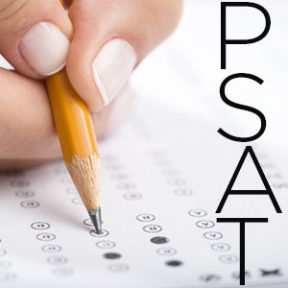
 It can help with college scholarships and admissions. Here’s how:
Everyone thinks the PSAT is just a preliminary “SAT” that colleges don’t see, and subsequently, they neither prep for it nor take it seriously. BIG MISTAKE! The PSAT is actually also the NMSQT, National Merit Scholarship Qualifying Test, which is the only way you can qualify to be a National Merit Scholar. Out of the 1.5 million students who take the PSAT each year, 34,000 students are commended and 16,000 become semifinalists. Of these 16,000 semifinalists, 15,000 go on to become Merit Scholars. These scholars win $2,500 scholarships or corporate/college scholarship awards. And this is just for taking the PSAT! Easy peasy.
Being recognized as a recipient of the Merit Scholarship Award is highly regarded by college admissions committees. When my daughter Nicole won this award, she received a full-scholarship offering from colleges that she didn’t even apply to! Colleges get ahold of these Merit Scholars and actively pursue them as they recruit students each year.
My recommendation: Take PSAT practice tests so you become familiar with the test process. Work on improving your scores by completing each section within the given time allotment. Review math concepts that you may have forgotten over the summer. READ, READ, READ. The best way to improve the tricky reading comprehension and grammar sections is to simply read every day.
You can start taking the PSAT in 9th grade. Your “real” PSAT score is calculated in 11th grade, so by starting early, you get 2 chances to prepare. Just think — this is probably one of the easiest scholarships to apply for — No essays! No interviews!. And if you score in the top 4%, colleges will be knocking on your door!
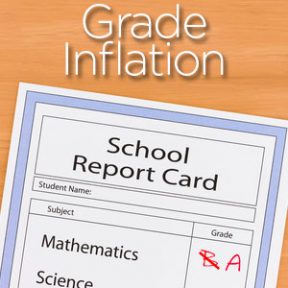
 …and how it will affect your child’s college admissions is alarming.
We all hear about grade inflation – when teachers give A’s to average students – and we look the other way, especially when our kids benefit from them, right? I’ve heard about teachers giving students a full-letter grade bump just for showing up to take the standardized tests at school each year. Others give students 10 points for bringing in snacks or class supplies. What’s worst of all are teachers who offer so much extra credit that students don’t do their work or study for tests because they know that one way or another, they can pull their terrible grades up to A’s by the end of the semester. None of this builds character or prepares students for college.
Grade inflation hurts the students.
Yup! Because so many schools are inflating grades – especially in white, affluent schools—colleges can’t rely on grade point averages (GPAs) to assess whether or not the students will be successful in their colleges. So when colleges can’t rely on the students’ grades, they revert to the SATs and ACTs. After all, college-bound students take the exact same test in a proctored classroom on the same day across the country. If we’re comparing apples to apples, this may seem more reliable than GPAs.
But SATs and ACTs don’t determine which students will be our next Bill Gates or Steve Jobs. Testing reading comprehension, grammar, math and science skills in a timed, multiple-choice format does not weed out students who would do poorly in college. Instead, students who do well on standardized tests today are those who can afford private SAT/ACT tutoring and spend years preparing for these tests.
Both the inflated GPA at wealthy white schools and high SAT/ACT scores due to expensive prep programs give these affluent students an unfair advantage. They aren’t better equipped to succeed in college; they’re simply able to afford to attend schools that give away A’s and spend many hours under the expensive supervision of SAT/ACT coaches.
The good news is that college admissions officers receive school profiles that list GPAs and demographics so they know which schools inflate grades. And colleges that require personal statements, essays, letters of recommendation and interviews use an eclectic approach to selecting their incoming classes. When a student stands out because they’ve done a project or something remarkable, colleges notice.
[Source]

 So you got your kid into college – and it’s a great college – and the financial reality smacks you in the head when you get your first college bill. Yikes! Unless you have the funds to pay for your child’s college safely tucked away under your mattress, you’re going to need money fast.
Be careful when looking at loans. They’re not all the same and the rules have changed. Check out many options before signing any contracts. I read this great article in Money Magazine (August 2017).
Federal Plus Loans (fixed APR: 8%)
Plus loans are the easiest to get – even with bad credit (except bankruptcy). Be careful how much you actually borrow because it’s easy to take more than you really need and then set yourself up for difficulty in repaying the loan later.
Private Loans (fixed APR: starting at 5.4% and up)
Private loan lenders seek clients with good credit history. So if you have excellent credit, you’ll probably get a great deal at a low APR. But if your credit is less than stellar, you may end up paying upwards of 12%! Yikes!
Home Equity (fixed APR: starting at 5.4% and up)
By using your home (that you own) as collateral, you can qualify for good loans at low APR. But, be careful of hidden costs – make sure your quotes include all costs such as appraisal fees. Because your home is probably one of your biggest investments, make sure you have enough funds to cover your retirement, kids’ weddings, and other expenses in the future.
Remember, education loans are almost impossible to escape – even in bankruptcy – so only borrow what you actually need.

 As a college advisor, I wonder why selective colleges like Princeton, Harvard, Yale and Stanford keep “trade secrets” about how they choose their freshmen class each year. Students and parents strive to see the formula that colleges use to determine who gets in and who doesn’t.
In the book, The Chosen: The Hidden History of Admission and Exclusion at Harvard, Yale, and Princeton? author Jerome Karabel exposed how the Ivy League was more interested in sustaining aristocracy than shaping young minds. They routinely rejected women, Jews, blacks, and others, and they even changed admissions criteria so their legacy and elite students would get in before the super bright Jews and Asians.
Sadly, it’s still going on today. Princeton just filed a “reverse Freedom of Information Act” lawsuit against the Dept. of Education and the Office of Civil Rights to prevent their “trade secrets” on admissions decisions from becoming public information. Hmm. I wonder what they’re hiding?
Every year, I see amazing students get passed up by legacy students (students whose parents attended the same colleges and donated lots of money) with substandard grades, average SAT/ACT scores, and no projects. If colleges were transparent about admissions decisions, I believe that more students would be admitted based on merit and not family name, wealth, and ethnicity.
[Source]



 We were rejected when we first applied to host a TEDx event. Yup. Actually, we were rejected twice because they considered our topics “too focused on climate change.”
To solve the problem, while we didn’t reduce our numbers of speakers who offered solutions to climate change, we did invite other interesting speakers to offer more diversity. But isn’t climate change the single most important crisis we face today? If we don’t reduce CO2 in the atmosphere and stop warming up the planet, our permafrost in the artic will begin to melt, and then we’ll face problems that we probably will not be able to fix.
In other words, if we don’t find solutions now, all of the other issues will be moot. Check out this interesting article by New York, “The Uninhabitable Earth.”