

Every parent has been there. You’re in the grocery store, trying to leave preschool, or just attempting to get your child into the car. Suddenly, your toddler melts down—crying, yelling, maybe even hitting — because he wants that toy. And almost instantly, something shifts in you.
Your voice tightens. Your patience disappears. You feel everyone’s eyes on you. Maybe you’re embarrassed. Maybe you’re frustrated. Maybe you’re just exhausted.
And in that moment, without realizing it, you’ve joined the meltdown.
This is where most parents go wrong. We react. We rush. We try to shut it down as quickly as possible. We say things like, “Stop it right now,” or “That’s enough,” or we grab our child and remove them from the situation without addressing what is happening.
The problem is, your child still wants that toy.
Now the situation has shifted. It’s no longer about the toy. It’s about emotion—yours and theirs. And children are incredibly sensitive to that. They pick up on your stress, your tone, your disappointment. Some children escalate because of it. Others shut down. Either way, the original goal gets lost.
What the child learns in that moment is not how to get what they want. They learn how powerful and scary emotions can be. They see their normally adoring mother turn into a mean monster, and that situations can spiral out of control quickly. And sometimes, they learn that their loudest or most intense behavior gets the biggest reaction. Oops, not what we want.
So let’s make this a teachable moment by bringing it back to the goal.
Your toddler’s goal is simple: “I want the toy.”
So instead of reacting to the behavior, calmly ask, “Do you want the toy?” Even a very young child understands that question. Then follow it with, “Is crying getting you the toy?” or “Is hitting working?”
This is where the shift happens. You are not scolding. You are helping them think.
Toddlers are much smarter than we give them credit for. They already notice when something is off limits. They know when they’re pushing a boundary. They absolutely notice your reactions—your tone, your face, your body language. What they don’t yet understand is how all of it connects.
That’s what we can teach.
“When you hit, Mommy gets upset. When Mommy gets upset, we have to leave. Then you don’t get the toy.” Pause. Take a breath so they can process this.
That’s not blame. That’s cause and effect.
Many parents hesitate here because they don’t want their child to feel bad or think, “Mommy is upset with me.” But avoiding that conversation actually creates more confusion. The child still sees your reaction—they just don’t understand it.
At the same time, there is a very important line we cannot cross. The child must never feel that your love is at risk or is conditional.
So while you are explaining what isn’t working, you anchor them: “I love you. It’s okay to want the toy. Let’s think about a good way to ask for it.”
This is where another common mistake happens. Parents either become too harsh in the moment, or they swing the other direction and give in just to make the situation stop. Both teach the wrong lesson.
Overreacting teaches the child that emotions are unpredictable and overwhelming.
Giving in teaches the child that escalation works.
Neither teaches them good communication skills.
What actually works is surprisingly simple, but it requires discipline from the adult. You stay calm. You slow things down. You bring the focus back to the goal, and then you show them a strategy that works.
“Can you say, ‘Can I have a turn?’”
When they try—even imperfectly—you acknowledge it. That’s the moment they begin to learn: this works.
Meltdowns are uncomfortable. They are inconvenient. And no parent handles them perfectly every time.
But they are also one of the most important teaching moments we have.
In these moments, children are not just learning about toys or limits. They are learning how the world works. They are learning how other people respond. And most importantly, they are learning strategies to adjust, communicate, and eventually get what they need in a positive way.
If we can stay focused on that—on helping them understand what works—we turn a meltdown into something far more valuable than just getting through the moment.
We teach them how to navigate life.
Every parent has been there. You’re in the grocery store, trying to leave preschool, or just attempting to get your child into the car. Suddenly, your toddler melts down—crying, yelling, maybe even hitting — because he wants that toy. And almost instantly, something shifts in you.
Your voice tightens. Your patience disappears. You feel everyone’s eyes on you. Maybe you’re embarrassed. Maybe you’re frustrated. Maybe you’re just exhausted.
And in that moment, without realizing it, you’ve joined the meltdown.
This is where most parents go wrong. We react. We rush. We try to shut it down as quickly as possible. We say things like, “Stop it right now,” or “That’s enough,” or we grab our child and remove them from the situation without addressing what is happening.
The problem is, your child still wants that toy.
Now the situation has shifted. It’s no longer about the toy. It’s about emotion—yours and theirs. And children are incredibly sensitive to that. They pick up on your stress, your tone, your disappointment. Some children escalate because of it. Others shut down. Either way, the original goal gets lost.
What the child learns in that moment is not how to get what they want. They learn how powerful and scary emotions can be. They see their normally adoring mother turn into a mean monster, and that situations can spiral out of control quickly. And sometimes, they learn that their loudest or most intense behavior gets the biggest reaction. Oops, not what we want.
So let’s make this a teachable moment by bringing it back to the goal.
Your toddler’s goal is simple: “I want the toy.”
So instead of reacting to the behavior, calmly ask, “Do you want the toy?” Even a very young child understands that question. Then follow it with, “Is crying getting you the toy?” or “Is hitting working?”
This is where the shift happens. You are not scolding. You are helping them think.
Toddlers are much smarter than we give them credit for. They already notice when something is off limits. They know when they’re pushing a boundary. They absolutely notice your reactions—your tone, your face, your body language. What they don’t yet understand is how all of it connects.
That’s what we can teach.
“When you hit, Mommy gets upset. When Mommy gets upset, we have to leave. Then you don’t get the toy.” Pause. Take a breath so they can process this.
That’s not blame. That’s cause and effect.
Many parents hesitate here because they don’t want their child to feel bad or think, “Mommy is upset with me.” But avoiding that conversation actually creates more confusion. The child still sees your reaction—they just don’t understand it.
At the same time, there is a very important line we cannot cross. The child must never feel that your love is at risk or is conditional.
So while you are explaining what isn’t working, you anchor them: “I love you. It’s okay to want the toy. Let’s think about a good way to ask for it.”
This is where another common mistake happens. Parents either become too harsh in the moment, or they swing the other direction and give in just to make the situation stop. Both teach the wrong lesson.
Overreacting teaches the child that emotions are unpredictable and overwhelming.
Giving in teaches the child that escalation works.
Neither teaches them good communication skills.
What actually works is surprisingly simple, but it requires discipline from the adult. You stay calm. You slow things down. You bring the focus back to the goal, and then you show them a strategy that works.
“Can you say, ‘Can I have a turn?’”
When they try—even imperfectly—you acknowledge it. That’s the moment they begin to learn: this works.
Meltdowns are uncomfortable. They are inconvenient. And no parent handles them perfectly every time.
But they are also one of the most important teaching moments we have.
In these moments, children are not just learning about toys or limits. They are learning how the world works. They are learning how other people respond. And most importantly, they are learning strategies to adjust, communicate, and eventually get what they need in a positive way.
If we can stay focused on that—on helping them understand what works—we turn a meltdown into something far more valuable than just getting through the moment.
We teach them how to navigate life.
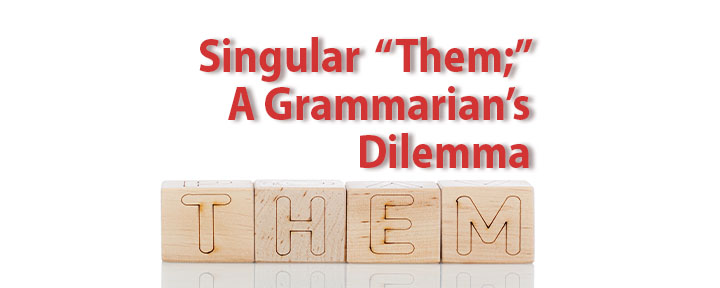
As a lifelong educator and a stickler for grammar, I’ve always valued precise language. I believe clarity matters—especially when teaching, writing, or communicating across generations. So, I’ll admit that the use of they/them as a singular pronoun for non-binary individuals has left me a little… grammatically disoriented.
Let me be clear: I fully support people’s right to define who they are and to ask others to respect that identity. For young people—especially those exploring gender beyond the traditional binary—having the power to say “these are my pronouns” is empowering and important. I respect that. I support that. And I believe our schools, workplaces, and communities should too.
But here’s the dilemma: they and them have always been plural pronouns in standard English. When someone says, “They’ll be joining you at 3 p.m.,” my mind naturally imagines more than one person walking through the door. That’s what I was taught. That’s what I’ve taught others. And that’s what causes confusion—not out of disrespect, but out of habit and grammatical instinct.
In recent years, I’ve had to catch myself—more than once—after misunderstanding whether one person or a group was being referenced. And I’ve heard the same concern from other educators, parents, and colleagues. The confusion isn’t about rejection of identity; it’s about language systems catching up to social change.
My 40-year-old daughter recently cautioned me that voicing this opinion publicly could upset people who’ve fought hard for recognition and inclusion. I understand that. This article isn’t meant to dismiss or criticize anyone’s chosen pronouns. Rather, I hope it opens the door to a respectful conversation about how we use language to support identity and maintain clarity.
Because isn’t that what communication is about? Making sure that our message is both respectful and understood?
The truth is, English is constantly evolving. We’ve adapted before. You used to be strictly plural. Now we use it for individuals all the time. And the singular they actually has historical roots in the writings of Shakespeare and Jane Austen. Still, today’s usage of they/them as a personal pronoun is new for many people, and it comes with some practical challenges.
That’s why I wonder: might there be a future where we create—or adopt—a new gender-neutral singular pronoun? One that clearly refers to one person and avoids the grammatical confusion that “they” can cause?
Interestingly, some individuals already use gender-neutral pronouns like ze/hir/hirs. Pronounced zee, heer, and heers, these pronouns work similarly to he/him/his or she/her/hers. For example:
• “Ze is a teacher.”
• “I spoke to hir yesterday.”
• “That book is hirs.”
These alternative pronouns have not yet gained mainstream usage, but they offer a possible path forward—language that is both inclusive and less ambiguous in terms of number. Perhaps, with time and broader awareness, they could help bridge the gap between clarity and respect.
Of course, any shift like this takes time. Language doesn’t change overnight—especially when it’s tied to something as personal and sensitive as identity. And any new pronouns must be chosen, embraced, and led by the communities who use them.
In the meantime, I believe there’s a shared responsibility. For those of us who grew up in a more rigid grammatical world, it’s important to learn, adapt, and make space for gender diversity. Using someone’s correct pronouns is a small act of kindness that can give comfort. For those who use they/them, offering context or clarifying language when helpful (“My friend uses they/them pronouns and will join us later”) can reduce misunderstanding without compromising identity.
This isn’t an either/or issue—it’s a both/and. We can respect identity and advocate for clear communication. We can support the use of they/them now, and still have a thoughtful conversation about how inclusive language can evolve in ways that serve everyone.
Ultimately, language is a bridge. Let’s build it together—with compassion, with clarity, and with the humility to keep learning.
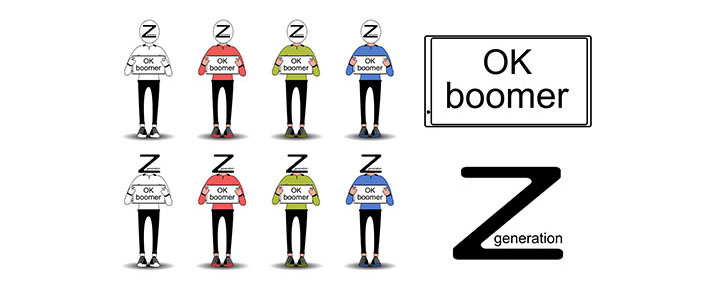
I remember back in the 60s and 70s when my generation’s slang was a unique form of communication created to exclude the “square” older generation. It was kind of like speaking in Pig Latin as a code during slumber parties and in elementary school. Well today, a clever high school teacher created a slang dictionary of Generation Z’s vocabulary.
Unlike our generation where we used completely different words, Gen Z teens add a little gangsta for some of their phrases – “Witchu” for “with you.” But they also use clever phrase like “spill the tea” for “gossip – as in something you do while having tea with gossipy old ladies.”
One thing for sure: our English language constantly changes –whether we like it or not – so take a look at this slang dictionary to get up to speed with the Gen Z. In order to communicate with these young people, we need to understand their new slang.